Generous Networking

I’m happy to be back on the blog to share the news about organising an event to bring together students across Montréal to discuss experiences, enhance research synergies and connect the industry with the dynamic pool of talent that exists in town. I was part of the organising committee for the 3rd Montréal Photonics Networking Event. The event was held on December 3rd 2019 in conjunction with the STARaCOM Winter School at McGill University’s New Residence Hall Conference Centre. There were almost 100 attendees, with 70 students, 18 of which presented research posters, and 20 professionals, including 10 judges from industry and academia.

Committee Slide
The organising Committee of the 3rd Montréal Photonics Networking Event, with representatives from academia, industry and students from all 6 Montréal Universities with photonics research.

The event was brought together through our shared network. Everyone worked hard to get the word out to the students and professionals in town. We hosted two amazing speakers, Prof. Caroline Boudoux and Dr. Sebastien Blais-Ouellette, who shared their perspectives on transforming photonics technologies into enterprises. We obtained support from our partners to get this event off the ground and celebrate the quality of the research in Montréal, so I have to extend a special thanks to our partners, SPIE, the International Society for Optics and Photonics, Excelitas Technologies, IEEE Montreal, Optonique and STARaCOM.

The dynamics in the organisation of this event reflect a form of Generous Networking, a concept that I borrowed from a generous networker and friend, Dr. Christina Willis. The idea is simple: 

Know what your connections need, and find ways to help them before asking for their help.

I have been fortunate that through the professional networking I developed during my years in academia I encountered many individuals who were generous in their time and advice to help me settle in a new town far from “home”. Being part of the global students networks of the OSA, SPIE and IEEE Photonics Society organisations has been a privilege and a career boost. I enjoyed having the chance to meet  the current student leaders across the universities in Montréal and be a part of the informal chapter meet-up at our event. Montréal is a cradle of talent to feed the 200+ companies in the greater Montréal recently identified by Optonique’s survey of the Quebec Photonics landscape.

img_20191203_142801830
Student leaders of the SPIE, OSA and IEEE Photonics Society professional organisations in Montréal.

In the year that I’ve been in Montreal, I have enjoyed discovering the city and its rich professional landscape for photonics. I am grateful to the generous networkers who have contributed to helping me to get to where I am today. Thank you for giving me the opportunity to connect the dots back through my involvement in the Montréal Photonics Community. It’s fun, collaborative and there is still a lot of progress potential: all of this helps me with getting up in the morning!

Save the date: the 4th annual event is coming back to Montréal on October 23rd 2020!

191203-171324-0980
See you in 2020 for the 4th Montréal Photonics Networking Event! Photo credit Owen Egan

Lessons learnt in innovation

The EPSRC summer school was an applied approach to understanding the many different facets of innovation and entrepreneurship in photonics. The week featured Technologists who shared case studies and valuable insights into how a technology or a scientific principle could be developed into a business. To echo thoughts that I heard throughout the week, it’s not the tech that makes money, it’s the business model wrapped around it. There is not a recipe to for all and for this reason it was extremely insightful to get many perspectives from experts from in their early steps of entrepreneurship right through to the seasoned innovators.

Right to left: Prof. T. Baer, Prof. M. Dawson and Prof. C. Boudoux in conversation with moderator Prof. D. Reid during the panel discussion on innovation and entrepreneurship experiences.
Perspectives on innovation and entrepreneurship panel discussion with (right to left) Prof. T. Baer, Prof. M. Dawson and Prof. C. Boudoux in conversation with moderator Prof. D. Reid.

The school also consisted of courses in management and strategic planning techniques that can enable development and innovation in companies. Methods such as SCRUM , SWOT analysis and PESTEL, as well as technology screening techniques were introduced. These were put into practice throughout the week in an effort from the organisers to make the concepts as tangible as possible, which was very engaging and effective. A couple of lessons have stuck with me. First, complex information unrelated to the technology can be strategically selected to make greater impact in the workings of an organisation. Second, which resonated with me very well, values inform both the vision and the mission of a business organisation.

In conversation with Mike Reilly during SCRUM workshop session for the development of a business plan for our social enterprise.

The main deliverable of the week was a group project to develop a pitch for a start up for a product or service for the photonics industry. My team, Haggis Photonics (affectionately named after one of Scotland’s national delicacies), developed a pitch based on building automated components for the photonics industry using 3D printed technology. The business would place itself between the expensive equipment and the Makers market. We also identified a potential to use this product for the training of technician in vocational career paths, a subject close to my heart! We had the opportunity to pitch the idea to 3 serial entrepreneurs and business development experts. The exercise and feedback was very insightful into what is needed in the process of developing a business.

Final poster presentation of my research in integrated optics and Bragg gratings from the University of Southampton!
My final poster presentation on my research in integrated optics and Bragg gratings from the University of Southampton!

The week was very enjoyable, busy and packed full of educational and social activities. The social highlights for me were the traditional Scottish Ceidh, a very active evening of dancing, and the banquet dinner in the luxurious university Lower College Hall (see cover picture!). I also had the opportunity to present one of my last projects that I have conducted in Southampton as a result of research done during my PhD, which was a great opportunity to reflect on the work I had conducted in the past 4.5 years.  Thanks to the school I have gained a lot of insight into how innovation takes place in the tech sector. It has given me lots of pointers to look out for as I embark on the next stage of my career (announcement on job situation to follow!).

To sign off, I wish to extend a thank you to Prof. Derryck Reid and Kasia Sulima for the organisation of the summer school, Munadi Ahmad for the cover picture, and the local student organising team for a week packed of social activities. Thanks for tuning in. Bye for now.

Worldwide Universities Networks

During my recent trip to China I had the opportunity to meet with researchers in my field of integrated photonics. Through Chaotan Sima, an alumni of my research group in the Optoelectronics Research Centre, I was introduced to Professor Huilian Ma, of Zhejiang University’s Laboratory of Micro-Optic Gyroscopes in the school of Aeronautics and Astronautics. The research centre has approximately 40 research students and 10 professors. I had the pleasure of meeting Prof. Ma’s group, including my PhD student-counterpart Jianjie Zhang. I am extremely grateful for the kind and generous reception of my hosts, who made me discover Hangzhou food and helped me settle in after an eventful travel. Credit goes to them too for all the pictures in the post!

A warm reception to Hangzhou, with Prof. H Ma's research group and Chaotan Sima, to my right.
A warm reception to Hangzhou, with (left to right) Lu Ying, Lin Yi, Ma Huilian, Sima Chaotan, Posner 马修 (me!), Zhang Jianjie, Ye Sen and Li Hanzhao. In Chinese, it’s first surname, then given name!

The visit was a great opportunity to learn about how photonics integrated circuits can be used as optical gyroscopes. Gyroscopes are used to stabilise position of navigation systems or automatic pilots independent of their movement of rotation. It is important for space applications, such as in satellites orbiting around the earth, where the ability to accurately determine position is of the utmost importance. Normally gyroscopes have moving (mechanical) parts, so can be delicate to package and send safely up to the space! The integration of these devices leads to more stable, smaller and scalable technologies.

Prof. Ma’s group at Zhejiang University is developing integrated optical gyroscopes on chips the size of a large stamp. They design and test prototypes on a silica-(glass)-on-silicon platform. These devices must maintain a very high signal-to-noise ratio to be efficient sensors. A well-known problem for optical gyroscopes is that the signal can be degraded by imperfect polarisations of the laser source used with these systems. In Southampton I had been researching ways to create on-chip polarisation filters compatible with silica technology, which could improve the performance of these devices. In the months leading up to this trip I had received some prototypes to test the suitability of the Southampton Direct UV Writing laser system to make polarizing filters using tilted gratings in waveguides, using the fabrication techniques I’ve discussed previously. The visit gave me the opportunity to present the work I’ve conducted to date and understand the testing methods. It’s been extremely worthwhile discussing the project directly with the people involved, and I’m looking forward to further experimental work that will arise from these discussions.

Professor Huilian Ma, I, and ORC alumni Chaotan Sima discussing preliminary test results of the integrated optical gyroscopes.
Professor Ma Huilian, Sima Chaotan and I discussing preliminary test results of the integrated optical gyroscopes, with some refreshing seasonal fruits.

California

Welcome to my gallery of my trip through California. Enjoy!

Update February 2018! See my latest post on my trip to Photonics West 2018.

Sunset at Lake Tahoe
Sunset at Lake Tahoe.
Emerald Bay, Lake Tahoe
Emerald Bay, Lake Tahoe.
Becky, me and Lake Tahoe selfie
Becky, me and Lake Tahoe selfie at Squaw Valley.
Alpine Meadows, CA
Alpine Meadows, CA.
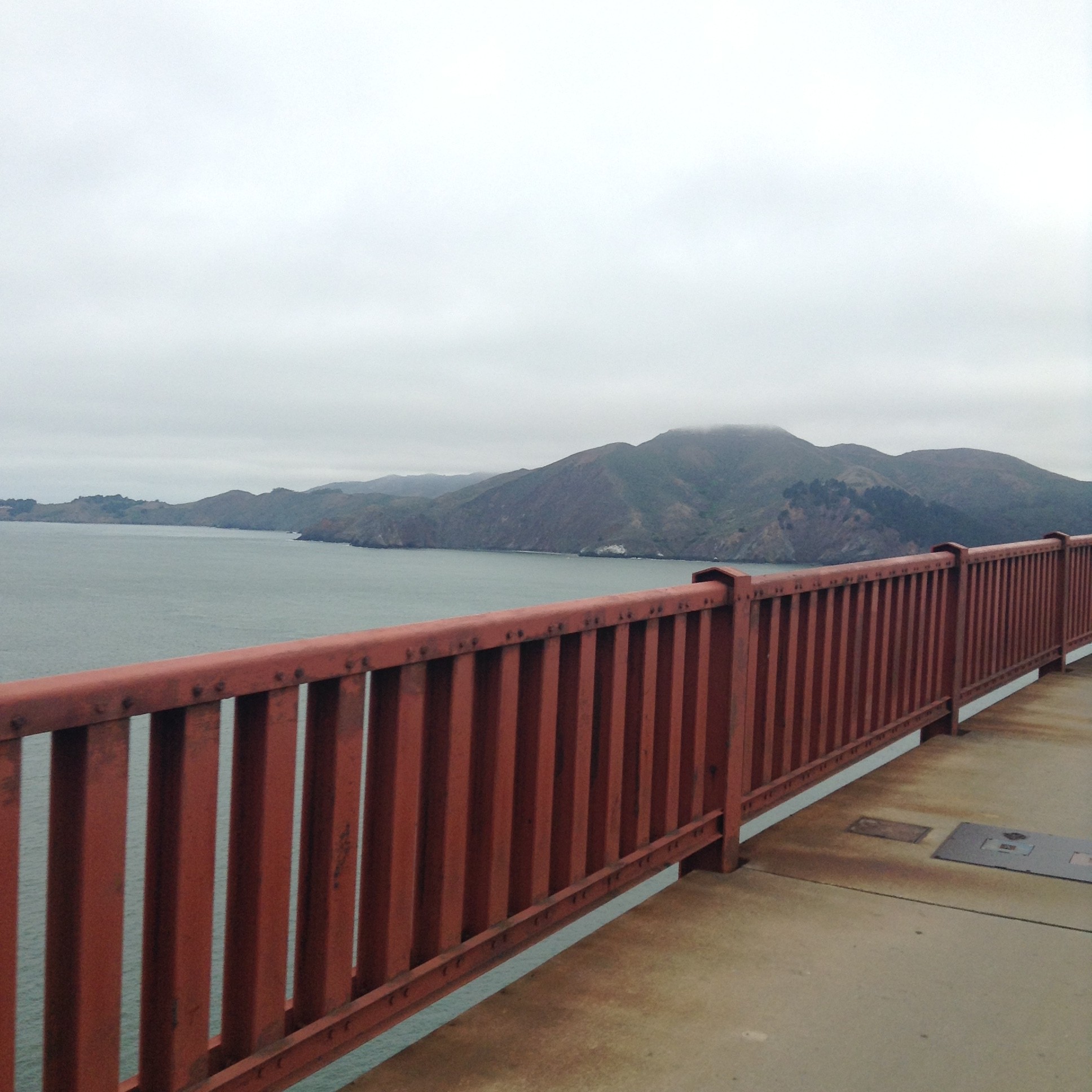
On top of the Golden Gate Bridge, San Francisco
On top of the Golden Gate Bridge, San Francisco.
Pacific Cliffs, West San Francisco
Pacific Cliffs, West San Francisco.
Jazz in San Francisco
Jazz in San Francisco.
Alcatraz and the Bay
Alcatraz and the Bay.
Sea lions at Pier 39, San Francisco
Sea lions at Pier 39, San Francisco.
Coit Tower, San Francisco
Coit Tower, San Francisco.
San Francisco from Twin Peaks
San Francisco from Twin Peaks.

Summer 2016 in California.

Riding across the Golden Gate Bridge.
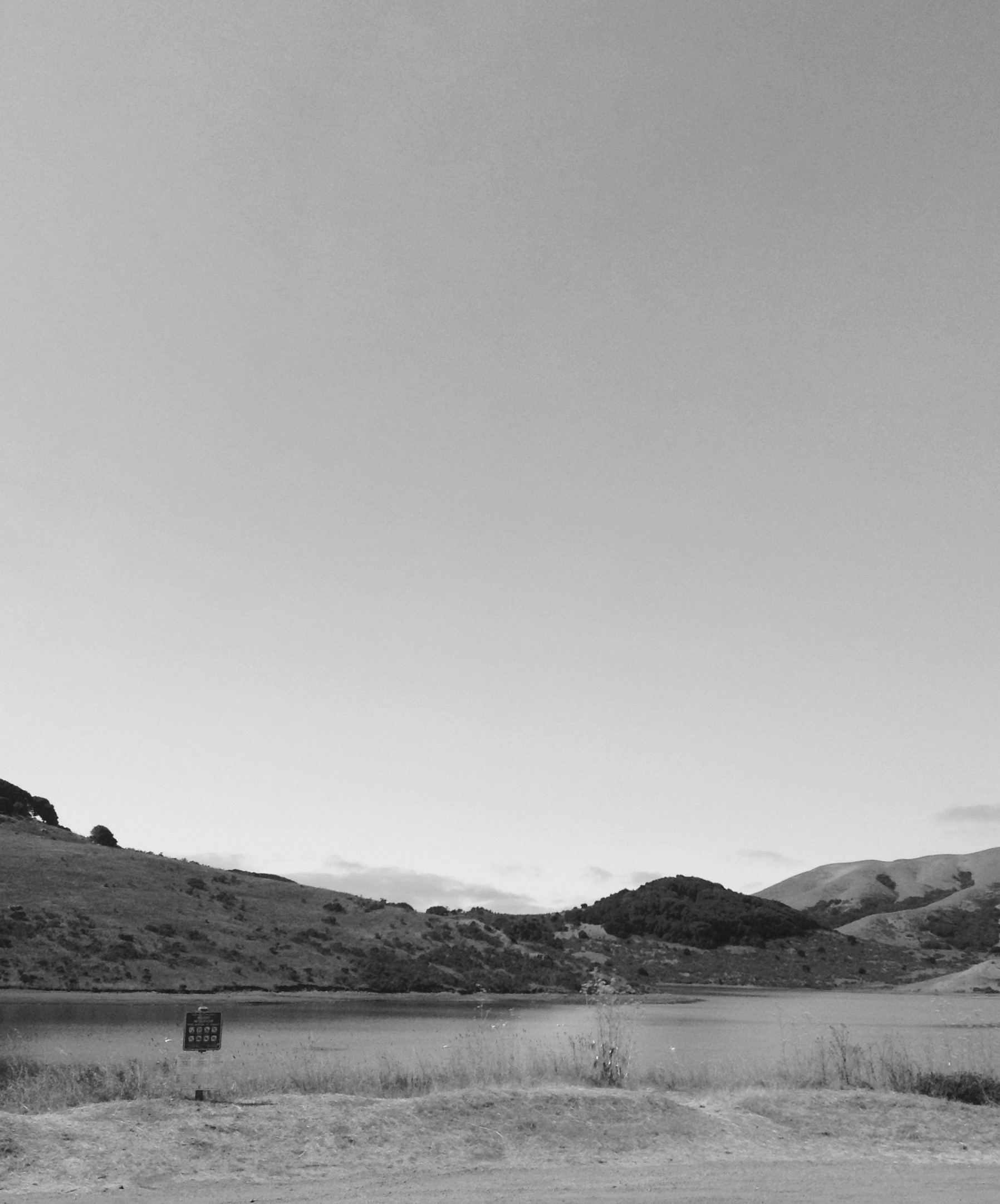
Nicasio reservoir.
Nicasio reservoir.
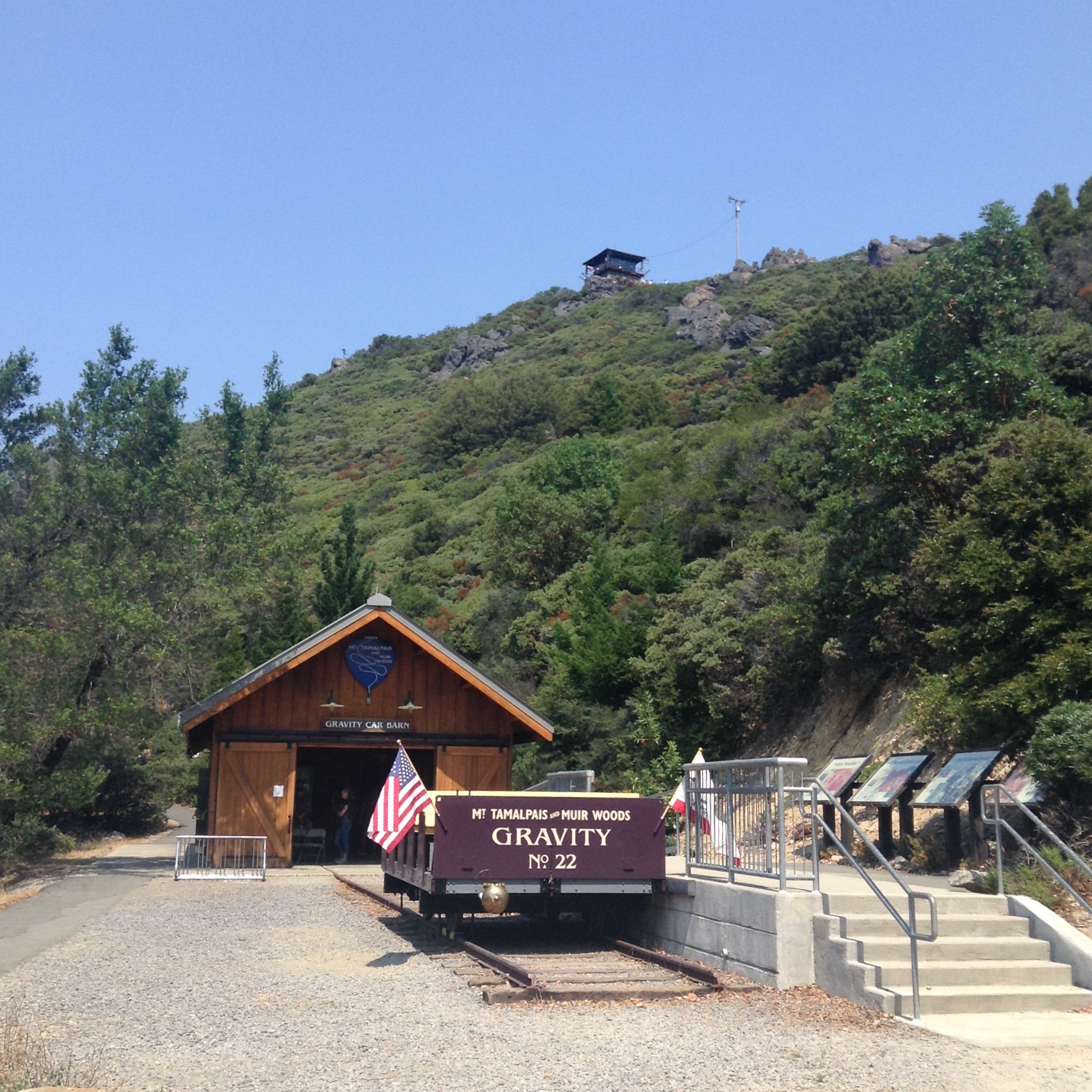
Mount Tam Gravity train.
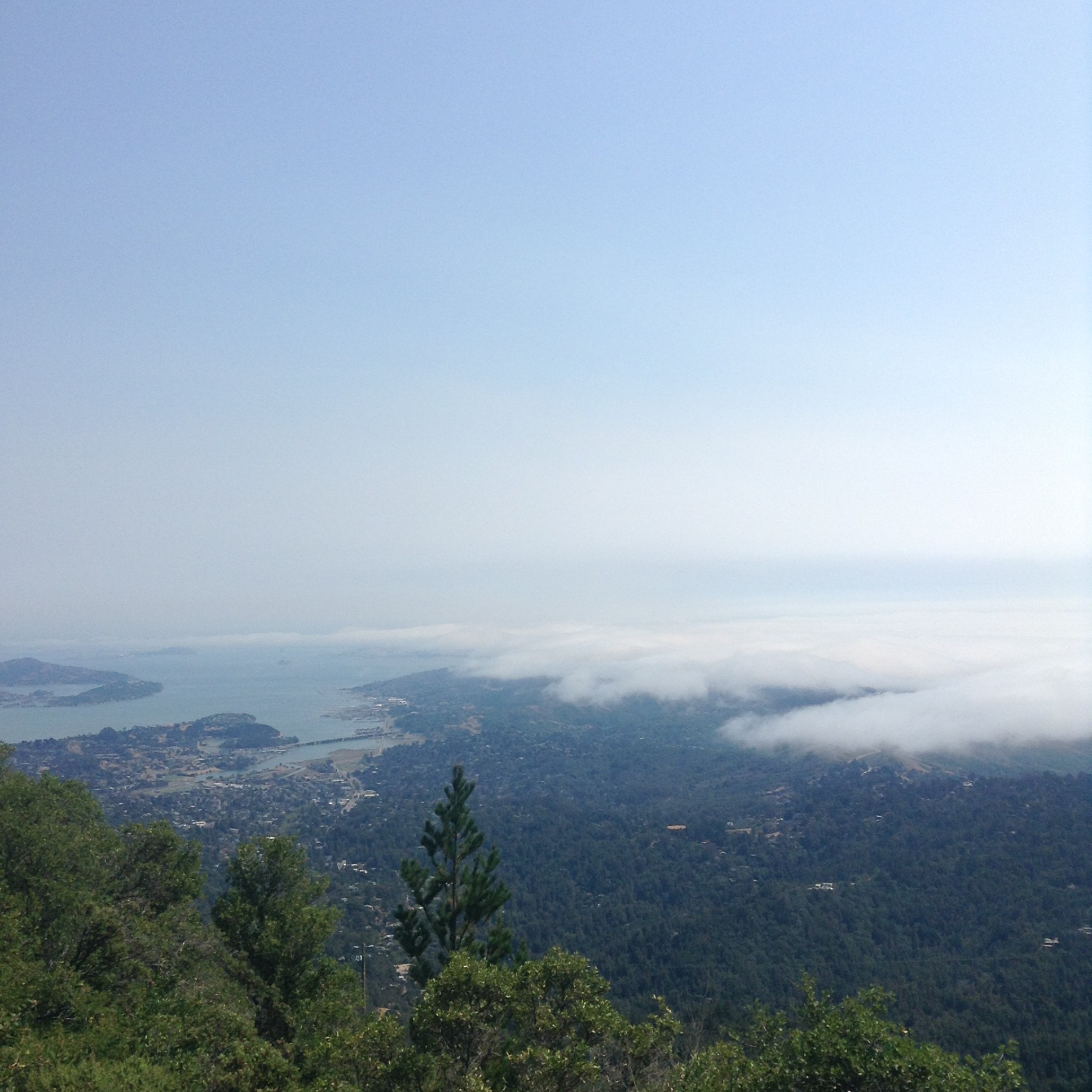
Getting above the clouds, west peak of Mount Tamalpais.
Just getting above the clouds near Stinson Beach.