
Since I wrote about my first international online workshop experience at the start of the summer, I can report back, unsurprisingly perhaps, to say that a majority of my meetings have shifted online. It’s been a blur of Google Meet, Zoom, Teams, Webex, Remo and other online spaces used to connect with family, friends and colleagues. In July, Shashwath Bharadwaj hosted me on the SPIE Facebook Career Lab for a week long residency to discuss these online meeting experiences. I ran a survey with about 40 of the group Members, and found that amongst respondents aged 25-35, most were meeting online for work at least 2-3 times a week. This time last year for me, it was probably closer to 2-3 per month for work!

The inspiration for this blog has shifted. The reflex for reporting a trip and travel, which physically took me out of context, has evaporated. I had planned to write earlier about my August travel to Sunny San Diego and the paper that I was going to be presenting at the SPIE Optics Education and Outreach conference, but that went digital too. The paper was published and presented, virtually of course, as part of the SPIE Digital Forum. This was a first for me, which involved a combination of writing a paper, adapting it to present on a Slack channel, pre-recording a talk following expert advice (see Jean-Luc Doumont’s SPIE webinar online), setting up my home space to present my work. A shift into a new normal!

The reception of the paper has been pleasing. My SPIE Slack channel had almost 70 people following my experimentation with live “Slack chats“, to translate the paper to this text-chat-platform. As a follow-up, I was invited by Excelitas‘ global training and development program to share this work with colleagues in the organisation. This turned out to be my largest live technical audience to date, with almost 100 people from 3 continents on the web. People have been interested in discussing how skills can be transferred between teaching and work environments, lessons learnt from internship programs, and the need for programs for training in industry with models for inclusivity and equity at their core. I appreciated the sense of appreciation from my colleagues and the wider community.

The need to connect with the professional community has accompanied me throughout the summer. I have had the pleasure to e-meet many new people through digital networking. The need to learn new tools to make new connections were fast tracked by my responsibilities in other volunteering roles! My governance roles with the SPIE took a digital turn, and opened new and wonderful ways to connect and progress on this aspect of my volunteer work for students, early career professionals and education. Closer to home in Montréal, the next big event ahead is the 4th Montreal Photonics Networking Event. This is happening on a screen near you, on Friday 23rd October! If you have read this far, you are invited to register!

It’s certainly an exciting time to be learning, collaborating and making progress in the fields. I wish to sign off with a note of appreciation to the technologists that have permitted an accelerated digital transition to this new online reality. In my research days, I taught school students a class called Communicating with Light – developed independently from Prof. Polina Bayvel’s excellent Clifford Patterson lecture. We explored how the science and technology of photons and electroncs, photonics and electronics respectively, were used in getting our internet to function. The internet is made possible by the physical infrastructure of fibre optics cables laid around a world and improvement to computer chips to make sense of the digital information leaping across continents. The reality that we’ve glided into a new scale of this digital age is testimony to how important the fundamental sciences and applied technology have been in helping this happen. As I mark this post in the Canadian Thanksgiving weekend, I reflect on that there is a lot to be grateful, not least your attention!


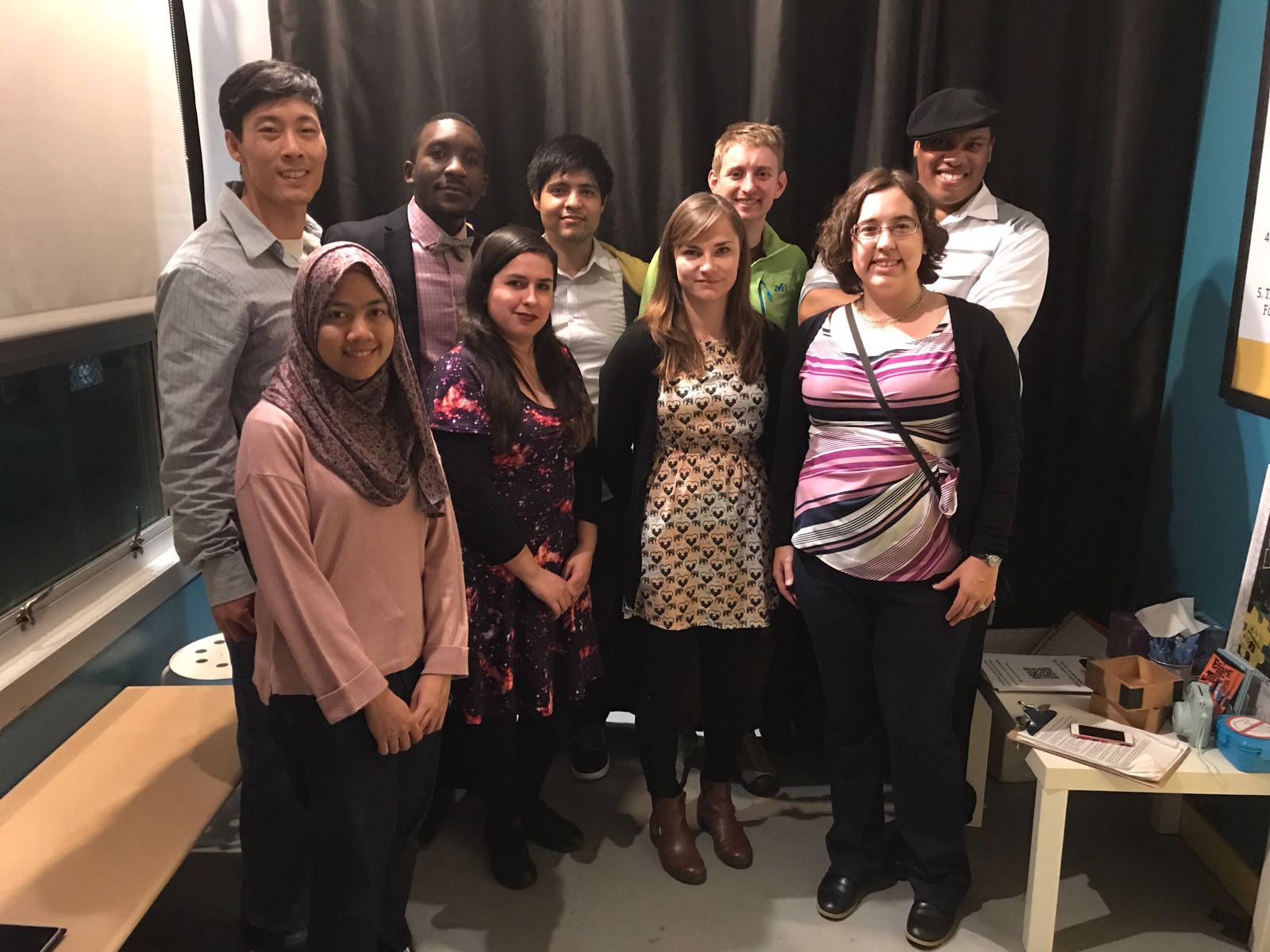
 International Photonics and Outreach